If you’ve started researching ways to improve your home’s water quality, you’ve probably come across two common solutions: water softeners and water filters.
At first glance, they may seem like they do the same thing, but they solve two very different problems.
A water softener is designed to tackle hard water, while a water filter focuses on reducing contaminants that affect water quality, taste, and odor. Depending on your home’s water, you may need one, the other, or a combination of both.
In this guide, we’ll explain the differences, compare how each system works, and help you determine which solution is right for your household.
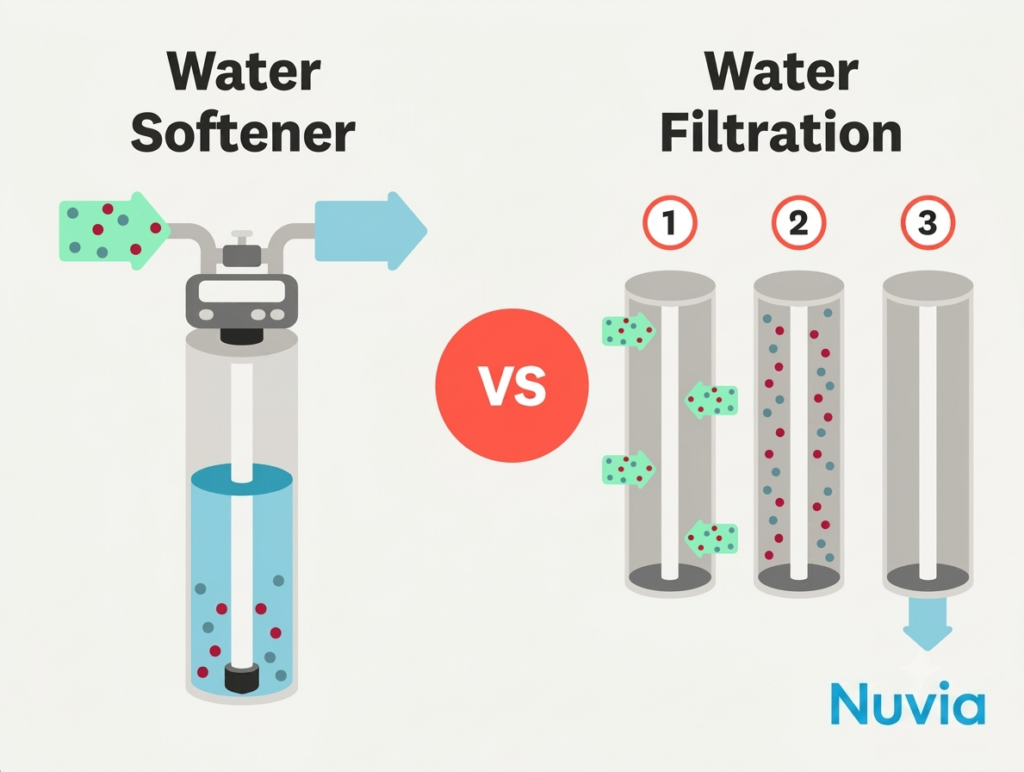
Water Softener vs. Water Filter: A Quick Comparison
| Water Softener | Water Filter |
|---|---|
| Primarily treats hard water | Primarily improves water quality |
| Removes hardness minerals like calcium and magnesium | Helps reduce contaminants such as chlorine, sediment, and other impurities |
| Helps prevent scale buildup | Improves taste and odor |
| Protects plumbing and appliances | Produces cleaner drinking water |
| Improves soap performance | Helps reduce unwanted chemicals and particles |
Although these systems have different purposes, they often complement one another rather than compete.
Let’s take a closer look at how each one works.
What Does a Water Softener Do?
A water softener is designed to reduce the effects of hard water by removing or treating the minerals responsible for scale buildup.
Hard water contains naturally occurring calcium and magnesium that accumulate inside pipes, water heaters, dishwashers, washing machines, and plumbing fixtures. Over time, these mineral deposits can reduce efficiency, shorten appliance lifespan, and leave behind stubborn white residue throughout your home.
Traditional water softeners typically use an ion exchange process, replacing hardness minerals with sodium or potassium ions. Modern water treatment systems may also incorporate advanced conditioning and refining technologies to improve overall water quality while reducing scale formation.
The benefits of a whole-home water softening system include:
- Softer-feeling water throughout the home
- Reduced scale buildup on faucets and showerheads
- Cleaner dishes and glassware
- Softer laundry
- Healthier-looking skin and hair
- Improved appliance efficiency
- Longer plumbing system lifespan
If your biggest frustrations involve white spots on dishes, stiff towels, clogged showerheads, or dry skin after showering, a whole-home water refining solution may be the answer.
What Does a Water Filter Do?
Unlike a water softener, a water filter focuses on improving the quality of the water itself.
Instead of targeting hardness minerals, filtration systems are designed to help reduce contaminants that may affect taste, odor, appearance, or overall drinking water quality.
Depending on the type of system, water filters can help reduce:
- Chlorine
- Sediment
- Rust particles
- Dirt
- Unpleasant tastes and odors
- Certain heavy metals
- Dissolved solids (when using reverse osmosis technology)
For homeowners primarily concerned about the water they drink, cook with, or use for coffee, tea, and ice, a dedicated drinking water filtration system is often the ideal solution.

How Reverse Osmosis Fits In
One of the most effective forms of drinking water filtration is reverse osmosis (RO).
Reverse osmosis systems force water through a specialized membrane that helps reduce microscopic contaminants, dissolved solids, and impurities that standard carbon filters may not remove.
For homeowners looking for cleaner, fresher-tasting drinking water, RO systems are among the most popular choices available today.
The Nuvia ClarityX™ is an advanced tankless reverse osmosis system designed to deliver purified drinking water on demand. Its compact design saves valuable space beneath the sink while offering high-flow performance, quick-change filters, smart filter monitoring, and NSF/ANSI-certified filtration.
Another excellent option is the Nuvia Clarity Oasis™, a compact five-stage reverse osmosis drinking water system engineered to provide bottled-quality water directly from your tap. With optional alkaline filtration, it offers an excellent solution for families looking to improve both taste and overall drinking water quality.
Whether you choose a tankless RO system or a traditional multi-stage design, reverse osmosis provides an additional layer of protection for the water you consume every day.
Which System Solves Hard Water Problems?
If your main concern is hard water, a drinking water filter alone won’t solve the issue.
While reverse osmosis systems are excellent for improving drinking water quality, they are typically installed under the kitchen sink and treat only the water coming from that dedicated faucet.
That means the water flowing through your:
- Showers
- Washing machine
- Dishwasher
- Bathrooms
- Water heater
- Outdoor plumbing
…will still contain hardness minerals unless your home also has a whole-house treatment system.
For homeowners experiencing hard water throughout the house, a whole-home water refining system addresses the problem at its source before water reaches your plumbing fixtures and appliances.
What If You Need Both?
The truth is that many homeowners benefit from both a whole-home water refining system and a reverse osmosis drinking water system.
Rather than choosing one over the other, these systems work together to improve water quality throughout the entire home.
A typical setup looks like this:
Whole-Home Water Refining System
Installed where water enters your home, this system helps improve water quality for:
- Showers
- Baths
- Laundry
- Plumbing
- Water heaters
- Dishwashers
- Faucets throughout the home
Its primary purpose is to reduce hardness minerals, minimize scale buildup, and improve the overall performance of your home’s water.
Reverse Osmosis Drinking Water System
Installed beneath your kitchen sink, this system focuses specifically on the water you drink and cook with.
It helps reduce chlorine, sediment, dissolved solids, and other unwanted contaminants while providing crisp, refreshing water directly from a dedicated faucet.
Together, these systems provide comprehensive water treatment, protecting your home while improving the quality of your drinking water.
How Nuvia Water Helps Homeowners
At Nuvia Water, we understand that no two homes have exactly the same water quality.
That’s why our Enhanced Water Refining Systems are designed to improve water throughout your entire home by addressing hard water, scale buildup, chlorine, sediment, and other common water quality concerns.
For drinking water, our Nuvia ClarityX™ and Nuvia Clarity Oasis™ reverse osmosis systems provide cleaner, fresher-tasting water directly from your kitchen faucet using advanced multi-stage filtration technology.
Rather than relying on a one-size-fits-all solution, our water specialists evaluate your home’s unique water conditions before recommending the system that’s right for you.
Start with a FREE Water Quality Test
The biggest mistake homeowners make is purchasing a water treatment system before knowing what’s actually in their water.
A professional water analysis helps identify common issues such as:
- Hardness minerals
- Chlorine
- Sediment
- Taste and odor concerns
- Other common household water contaminants
With this information, you can choose the treatment solution that best matches your home’s needs.
Whether you need a whole-home water refining system, a reverse osmosis drinking water system, or a combination of both, the first step is understanding your water.
Schedule your FREE Water Quality Test today and let Nuvia Water help you find the right solution for cleaner, healthier water throughout your home.